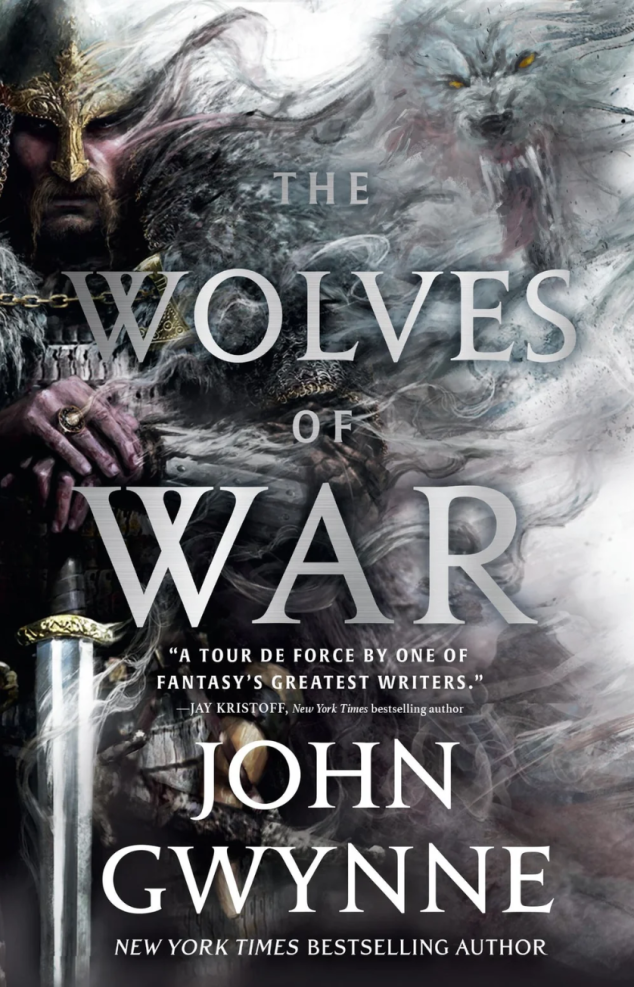
The Wolves of War ending explained: Halia's fate, Ingvar's fall, Dagmar's oath, and what John Gwynne sets up for Wolfheart Chronicles book 2.
The ending of The Wolves of War sets up a deeply personal quest for the next Wolfheart Chronicles book, with Halia's death, Ivan's determination to bring her back, and Dagmar's knowledge of an ancient magical relic pulling their stories together. Meanwhile, Ingvar's defeat at the hands of Prince Mal threatens to plunge the wider kingdom into an even more dangerous conflict. What I find particularly effective about this conclusion is how Gwynne takes everything the characters have been fighting for and makes their victories feel painfully fragile. Halia discovers extraordinary abilities, yet her confrontation with Iaga ends in tragedy. Ivan manages to protect what remains of his family, although their old life is effectively destroyed. Dagmar survives his ordeal and gains a new purpose through his connection to them. The final chapters leave readers with one enormous question: can the ancient powers associated with Perun offer a genuine path to Halia's resurrection, or is the family about to discover that some losses cannot be undone?
Halia's ending is easily the most devastating development, especially considering how much of the novel focuses on her growing confidence and relationship with the supernatural world. Her connection to Ink, Moon, and their wolf pack gradually becomes something far deeper than the freedom she experiences during her dreams. The wolves eventually recognize her as Wolf-Heart, giving her a sense of belonging that feels particularly meaningful after the suspicion and cruelty she faces among humans. She also demonstrates remarkable healing abilities, saving the wolf cub Night and restoring Dagmar's damaged body. These moments establish her potential as a powerful striga whose abilities are closely connected to life itself. That makes her final confrontation with Iaga Bone-Eater especially cruel. Halia attempts to fight the ancient witch in the spirit realm, using her developing magic against an enemy with terrifying experience. Iaga ultimately overpowers her, and the wounds inflicted upon Halia's spirit appear on her physical body before she dies. I found this heartbreaking because Halia has spent much of the book discovering what she can accomplish. Her death arrives just as that discovery begins to change her understanding of herself. It also raises an intriguing question for the sequel: if Halia's spirit can interact so directly with the physical world, could her supernatural connection somehow become relevant to restoring her life?
Ivan's storyline makes the tragedy feel considerably more personal because his motivations have remained remarkably consistent throughout the novel. He wants his family safe, preferably somewhere the ambitions of princes cannot reach them. Unfortunately, the final developments demonstrate just how impossible that wish has become. The murders of Gleba and Chief Brajan, Deva's betrayal, and the subsequent accusations against Halia shatter whatever security the family previously enjoyed in Selo. Yakun's hostility toward Halia has been building for much of the story, making the attempt to portray her as a dangerous witch particularly infuriating. The family eventually escapes, and Ivan helps rescue Dagmar from execution, although these successes offer little comfort after Halia's death. I think this is where Gwynne's portrayal of family loyalty becomes especially convincing. Ivan has already shown that he will fight when necessary, but the ending forces him into something much more frightening than an ordinary battle. His next objective requires confronting powers that experienced warriors barely understand. There is also a fascinating moral complication here: Ivan's willingness to protect Dagmar, a Northman who initially represents the occupying people his clan distrusts, becomes essential to his family's survival. Their alliance suggests that the next installment could challenge the divisions that have made cooperation between the different peoples so difficult.
Dagmar's importance to the Wolfheart Chronicles becomes much clearer in the final chapter, when his earlier expedition into Perun's Chamber acquires an entirely different significance. Root reveals the legend of Vatra's surviving red feather, an artifact believed capable of judging the worthy and raising them from death. Since Dagmar has already ventured into the chamber, Ivan asks him to help the family find it. Dagmar's agreement transforms his role from a wandering warrior bound by old obligations into someone whose knowledge could determine Halia's future. I particularly like how this development connects the novel's initially separate storylines. The dangerous expedition beneath Božjigrad, which once seemed concerned largely with treasure and the ambitions of powerful people, suddenly matters to a grieving family searching for a miracle. The mythology surrounding Perun, Veles, and Iaga also begins to look more consequential. Ancient legends have already demonstrated their ability to affect living characters, so the story of Vatra's feather deserves to be taken seriously. Still, the novel offers no guarantee that the artifact will work. The distinction matters because the family's new hope rests on a legend whose limitations remain largely unexplored.
Ingvar's apparent death introduces an equally significant problem for the wider political story. His conflict with Prince Mal has grown from disputes over tribute and territory into a struggle involving sorcery capable of overwhelming conventional military strength. During the final confrontation, Iaga's magic leaves Ingvar vulnerable, allowing Mal to strike him with his sword. The subsequent vision of Ingvar descending into a terrifying supernatural realm makes the scene particularly unsettling. His fall also raises questions about the future of his family and the political order he has established in Kyiv. Helga and their young son Sviatoslav could become increasingly important if his death leaves the Rus leadership vulnerable to rival claimants or rebellion. I suspect the consequences will extend far beyond Prince Mal's immediate ambitions. Ingvar's earlier willingness to employ the striga Mok already demonstrates that rulers are beginning to recognize supernatural power as a military necessity. With Iaga influencing the conflict, traditional warfare may become increasingly dependent on forces that neither side can fully control. The Slavic-inspired mythology makes this struggle especially interesting because the supernatural world possesses its own ancient history, suggesting that the ambitions of human princes may prove relatively insignificant beside the powers they have awakened.
My biggest theory for Wolfheart Chronicles book 2 concerns the true purpose of Vatra's feather. I suspect the attempt to resurrect Halia will involve a supernatural judgment that tests the family's understanding of life, death, and sacrifice. This is speculation, although it follows naturally from the established legend that the feather can judge the worthy and restore life. Gwynne has repeatedly emphasized Halia's compassion, particularly through her relationship with the wolves and her ability to heal others. Those qualities could become important if the feather's power depends on something beyond simply possessing it. There is also the possibility that Iaga will remain connected to Halia's fate, given the witch's involvement in her death and the older mythological conflict surrounding Perun's chamber. I would be especially interested in seeing the wolf pack influence the quest, perhaps through their connection to the spirit realm. The novel has already established that Halia's bond with them operates beyond ordinary physical limitations. Whether that connection survives her death is another matter. My suspicion is that the wolves will have a meaningful part to play in whatever happens next. Their presence beside Halia's body at the ending feels too deliberate to dismiss as a purely emotional farewell.
As a conclusion to the first book, The Wolves of War leaves me with mixed feelings in a way that genuinely suits the story. The slower development occasionally makes the different character perspectives feel frustratingly distant, and I would have welcomed more time exploring the wolves and Halia's increasingly unusual abilities. Some of the hostility directed toward her is also so persistent that certain antagonists begin to feel predictable. Yet the emotional payoff gives those quieter family scenes considerable weight. By the time Ivan and Dagmar stand together beside Halia's body, the importance of their relationship is painfully obvious. I do have one reservation about the resurrection storyline: bringing Halia back too conveniently could weaken the significance of her death. The sequel will need to make that possibility feel earned, particularly after treating the family's grief so seriously. Still, the final image of Halia surrounded by the wolves, with Dagmar committing himself to Ivan's desperate quest, is difficult to forget. The ending establishes the search for Vatra's feather as the central personal conflict ahead, while Ingvar's fall leaves the political future dangerously uncertain. For me, that is what makes the next Wolfheart Chronicles book so compelling. Somewhere beyond that quiet shelter, the old gods still have unfinished business, and a father who once wanted nothing more than an ordinary life is preparing to ask them for the impossible.
Pros:
Halia's tragic ending delivers a powerful emotional payoff.
Her connection to wolves and ancient magic creates compelling possibilities for the sequel.
Ivan's determination to save his family gives the larger fantasy conflict a deeply personal focus.
Dagmar's involvement in the search for Vatra's feather brings separate character storylines together.
Slavic-inspired mythology adds mystery and significance to the supernatural elements.
Ingvar's apparent death creates political uncertainty and raises the stakes for future books.
Unresolved questions about resurrection and supernatural powers provide intriguing sequel theories.
Cons:
The slower pacing can make the early character storylines feel disconnected.
Halia's death may frustrate readers invested in her developing abilities.
Some antagonists feel predictable in their hostility toward Halia.
The ending leaves major conflicts unresolved, making the conclusion heavily dependent on the sequel.
A convenient resurrection could undermine the emotional impact of Halia's death.
Certain supernatural mysteries remain frustratingly unexplained.
Bottom Line:
The Wolves of War delivers an emotionally devastating ending that makes the future of the Wolfheart Chronicles difficult to ignore. Halia's fate gives the sequel a compelling personal mystery, while Ivan and Dagmar's desperate quest offers a strong reason to remain invested in these characters. I'm particularly interested in how Gwynne will handle the possibility of resurrection without diminishing the consequences of Halia's death. Despite some pacing issues and frustratingly unresolved storylines, the conclusion makes the novel's slower development feel worthwhile. The biggest question heading into book two is whether bringing Halia back will demand a sacrifice even greater than losing her.
Tags:
the wolves of war ending explained, the wolves of war, john gwynne, wolfheart chronicles, halia ending explained, the wolves of war spoilers, wolfheart chronicles book 2, the wolves of war sequel, dagmar wolf-snarl, ingvar ruriksson