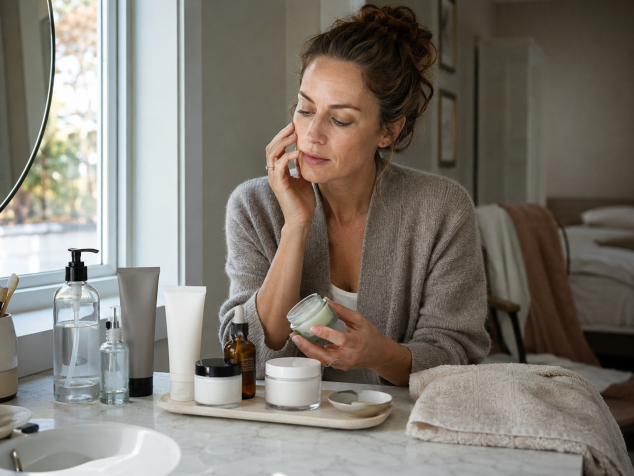
Cooler weather, lower humidity, and indoor heating can change what your skin needs, but a full routine overhaul is rarely necessary.
Yes, your skincare routine may need a few changes when summer turns into fall, although I rarely think a complete seasonal overhaul is necessary. The calendar matters far less than what starts happening to your skin once humidity drops, mornings get cooler, wind becomes more noticeable, and the heat comes on indoors. My own cue is usually very simple: the moisturizer that felt perfectly comfortable in August suddenly seems to disappear by lunchtime, or my skin feels tighter after cleansing than it did a few weeks earlier. That is when I start adjusting. For some people, a fall skincare routine might mean switching one product. Someone living in a dry climate with naturally dehydrated skin may need several changes. The useful question is less "Is it fall yet?" and more "Does my skin still feel comfortable with what I'm using?"
Cleansing is one of the first places I pay attention during the summer-to-fall skincare transition. In hot weather, there is often more sweat, sunscreen buildup, oil, and time spent outdoors, so a cleanser that feels appropriate in July can start feeling unnecessarily aggressive once that changes. Signs that a cleanser may be too stripping include tightness immediately after washing, increased flaking, stinging when applying products that normally feel fine, or a strangely squeaky-clean sensation. Someone with oily or acne-prone skin does not automatically need to abandon a foaming cleanser, especially if it continues to feel comfortable. I usually move toward a gentler cleanse at night once the weather cools and sometimes skip cleanser entirely in the morning in favour of a rinse. There is little benefit in removing more oil than your skin is actually producing.
Hydration becomes more important for many people when humidity falls because the surrounding air is less forgiving, especially once indoor heating starts running regularly. This is where I think people sometimes jump too quickly from a light summer routine straight into the richest cream they can find. Adding a hydrating serum or essence underneath an existing moisturizer may be enough. Ingredients commonly used for hydration and barrier support, such as glycerin, hyaluronic acid, panthenol, ceramides, or similar humectant and barrier-supporting ingredients, can help a routine feel more comfortable without dramatically changing its texture. In the morning, a sensible order is a gentle cleanse or rinse, followed by a hydrating serum, moisturizer, then broad-spectrum sunscreen. Products generally go from lighter, water-based layers toward richer ones, while sunscreen belongs at the end of the morning skincare routine so it can form an even protective layer.
The gel vs cream moisturizer question is where fall skincare gets especially individual. If a gel moisturizer still leaves your skin comfortable through the day, there is no reason to retire it because September arrived. Oily or acne-prone skin may continue to do better with lighter textures, particularly in humid climates or heated indoor environments that never become especially dry. My signal to change moisturizer is when I start noticing persistent tightness, rough patches, makeup catching on dry areas, or the urge to reapply moisturizer during the day. Even then, I sometimes keep my lightweight moisturizer in the morning and use a creamier fall moisturizer only at night. Another option is adding a slightly more occlusive final layer in the evening rather than replacing everything. That approach can work particularly well for skincare when humidity drops because it gives you more flexibility as the weather changes from week to week.
Fall can also be a reasonable time to reconsider treatment products, especially if you scaled back retinoids or exfoliating acids during periods of heavy summer sun exposure or frequent outdoor activity. I would resist the temptation to turn cooler weather into an excuse for an aggressive reset. Retinoids, exfoliating acids, vitamin C, and other active ingredients can all have useful roles, although introducing several changes at once makes irritation much harder to trace. My preference is to change frequency gradually. An evening routine might be cleanser, then a hydrating or treatment serum, followed by a retinoid or exfoliating treatment when appropriate, then moisturizer. Strong actives do not need to be layered together every night, and skin tolerance should decide frequency. If dryness, burning, persistent redness, eczema, or worsening acne becomes a recurring issue, that is a good point to get individualized advice from a dermatologist rather than continuing to experiment.
Sunscreen is the part of my seasonal skincare routine that stays remarkably boring, and I mean that as a compliment. Cooler temperatures have little to do with whether ultraviolet radiation reaches your skin, so sunscreen in fall still belongs in the morning routine. Shorter days may change how much time someone spends outside, yet daily habits often include commuting, walking, driving, sitting near windows, or spending part of the day outdoors. Broad-spectrum sunscreen remains especially relevant if you use retinoids, exfoliating acids, or other products that make diligent sun protection a sensible part of the routine. I would rather keep sunscreen consistent and make my seasonal adjustments around cleansing, hydration, and moisturizer texture.
The best way to transition skincare from summer to fall is to watch for changes in your skin before changing the routine itself. Dry skin may start needing more hydration or a richer nighttime moisturizer fairly early in the season. Oily skin may need almost no texture changes and might simply benefit from a gentler cleanser once sweat and oil production ease. Sensitive skin may respond best to fewer adjustments made slowly. Climate matters too. Fall skincare in a damp coastal city can look very different from skincare for dry fall weather in a heated home where the air becomes noticeably parched by October. I have stopped treating seasonal skincare as a scheduled product swap. I keep the products that are still doing their jobs, adjust the ones that are starting to feel wrong, and leave the rest alone. That tends to be the most useful fall skincare routine because it responds to what the skin is actually doing as the environment changes.
Pros:
- Easy to tailor based on how your skin actually reacts to cooler, drier weather
- A richer moisturizer or extra hydrating layer can help with seasonal dryness
- Switching to a gentler cleanser may reduce tightness and irritation
- Fall can be a practical time to gradually reintroduce retinoids or exfoliating acids
- You can keep lightweight textures if your skin is oily or acne-prone
- Most changes can be small, so there is no need to replace an entire routine
Cons:
- Changing too many products at once can make irritation difficult to trace
- Heavy creams may feel greasy or clogging for some skin types
- Seasonal changes vary widely by climate, indoor heating, and personal skin type
- Increasing actives too quickly can cause dryness or sensitivity
- It is easy to buy unnecessary products simply because the season has changed
Bottom Line:
A fall skincare routine usually works best with small, responsive adjustments rather than a complete seasonal reset. Pay attention to tightness, dryness, cleanser comfort, and moisturizer performance, then change only the steps that no longer seem to be working.
Tags:
fall skincare routine, summer to fall skincare, seasonal skincare routine, skincare for cooler weather, skincare for dry fall weather, fall moisturizer, gel vs cream moisturizer, when to change moisturizer, how to transition skincare from summer to fall,