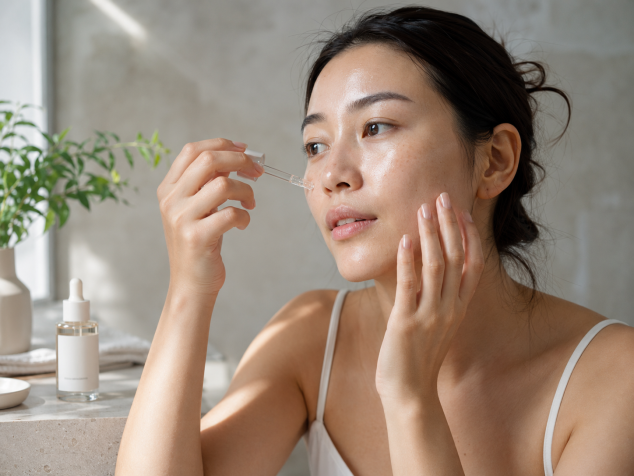
Topical PDRN looks promising for hydration, skin comfort, and a smoother, healthier-looking complexion. The bigger regenerative and anti-aging claims still need stronger evidence.
There are skincare ingredients that slowly work their way onto my radar, and then there is PDRN, which seemed to appear on every serum bottle, toner pad, ampoule, and beauty feed at once. The surge is real: NewBeauty recently included PDRN among beauty topics drawing notable Google search interest, while Vogue has been covering it as part of the broader fascination with Korean skincare ingredients and regenerative skincare. After looking past the more ambitious claims, I think the answer to what does PDRN serum do for your skin? is fairly grounded. Topical PDRN looks most interesting in formulas designed to improve hydration, support a healthier-looking skin barrier, make stressed or dry skin feel more comfortable, and leave the complexion looking smoother and plumper. The bigger promises around dramatic regeneration, wrinkle reversal, or injectable-like rejuvenation need much more evidence. That distinction matters to me because I already have enough serums competing for space beside my bathroom sink. A new one has to offer something useful beyond a very persuasive ingredient story.
So, what is PDRN in skincare? PDRN stands for polydeoxyribonucleotide, a term used for DNA-derived polymer fragments that have been studied in regenerative medicine and dermatology. PDRN has traditionally been associated with purified DNA material from salmonid sources, although the market now includes products described as plant-derived or vegan alternatives. Scientific reviews also point out that the terminology around PDRN and the closely related category of polynucleotides, or PN, is not always used consistently, which makes sweeping ingredient claims especially difficult. The ingredient's reputation comes largely from research into biological processes involved in skin recovery and tissue repair. That history explains why PDRN fits so neatly into the current language of regenerative skincare. It sounds far more intriguing than another bottle that simply promises hydration. For a cosmetic serum, though, I prefer a simpler standard: does the formula make my skin feel comfortable, stay hydrated longer, and look better with regular use? Those are reasonable outcomes to watch for without pretending a topical product is performing a medical procedure.
This is where the science needs some careful sorting. Much of the established PDRN literature concerns injectable, procedural, wound-care, laboratory, or other medical applications, and those findings cannot automatically be transferred to a serum sitting on top of intact skin. Skin penetration is an important limitation for topical PDRN because these molecules can be relatively large and charged, an issue researchers are actively studying. There is emerging human topical evidence that deserves attention. A 2026 study investigated a specific medium-length PDRN preparation in a 0.1% eye cream and included a randomized, double-blind split-face clinical comparison with 0.1% retinol over 28 days. Researchers reported improvements in measures related to photoaged skin and also conducted laboratory, ex vivo, and penetration work. I find that genuinely promising. It still represents a particular PDRN material in a particular formulation under defined study conditions. It does not establish that every PDRN toner, sheet mask, or inexpensive serum will produce the same effects. A recent systematic review of PDRN and polynucleotide therapy in dermatology reinforces the broader point that the field is growing while evidence quality and treatment protocols still vary.
The products themselves are also a reminder that PDRN skincare benefits rarely come from one ingredient working alone. Shoppers can now find PDRN serums, ampoules, toners, toner pads, sheet masks, and creams, especially from Korean beauty brands. Medicube's current PDRN Pink Peptide Serum, for example, contains sodium DNA alongside glycerin, niacinamide, sodium hyaluronate, peptides, and adenosine in its salmon-derived version. The brand also sells a PDRN toner, while Vogue has highlighted products such as Mediheal's PDRN Lifting Toner Pads and other PDRN-focused Korean formulas. That supporting cast matters. Glycerin and hyaluronic acid can contribute heavily to the plump, hydrated feeling people notice. Ceramides or panthenol can make a formula more appealing for barrier-conscious routines, while niacinamide or peptides may influence how smooth, even, or conditioned the skin looks over time. When I see a PDRN serum described as making skin feel dramatically softer after a week, my first reaction is not to dismiss the result. I simply want to know what else is in the bottle. A well-formulated PDRN product may be excellent skincare even when PDRN deserves only part of the credit.
A PDRN skincare routine can also be refreshingly uncomplicated. I would start with a gentle cleanser to remove sunscreen, makeup, excess oil, and the day's buildup, then use a hydrating toner or essence only if I actually enjoy that step. If the toner already contains PDRN, I see little reason to automatically add a second PDRN treatment unless the formulas serve different purposes. A PDRN serum or ampoule generally makes sense after watery hydration steps and before a heavier moisturizer, which helps hold onto moisture and reinforces the comfortable finish I am looking for in this category. In the morning, broad-spectrum sunscreen comes last, and I would put far more faith in consistent sun protection for preventing visible photoaging than in any fashionable serum. You also do not need an elaborate Korean skincare routine to try topical PDRN. Cleanser, one well-chosen treatment, moisturizer, and daytime sunscreen are enough. That is probably how I would test the ingredient myself, because piling five new products onto my face at once makes it almost impossible to tell which one is doing anything.
Who is most likely to enjoy a PDRN serum? I think it makes the most sense for someone whose skin frequently feels dehydrated, looks a little dull, or becomes easily stressed by weather, travel, retinoids, or an overenthusiastic skincare routine. In that situation, a lightweight formula focused on moisture and comfort can be appealing even before we get into the longer-term questions around elasticity and visible aging. The current research gives me enough reason to watch that area with interest, especially as topical delivery becomes better studied, while the evidence is still developing. Someone who already owns a hydrating serum they love, uses a moisturizer that keeps their barrier comfortable, and consistently wears sunscreen has less reason to sprint toward the nearest PDRN launch. The difference may be subtle. I would also pay attention to the formula if I had very reactive skin or ingredient sensitivities, since a PDRN label tells you surprisingly little about the rest of the product. The same ingredient can sit inside a minimalist watery serum or a much busier formula containing fragrance and multiple actives.
My verdict is that topical PDRN earns a cautious place on my skincare shelf, especially when it comes in a lightweight serum that makes my skin feel noticeably more hydrated and settled without complicating the rest of my routine. I like that there is legitimate scientific interest behind the ingredient, and the appearance of newer topical human research makes it more compelling than a trend built entirely on marketing. I would keep using a PDRN serum if my skin consistently felt softer, retained moisture better, and looked smoother with regular use. I would not expect it to reproduce an injectable treatment or transform established signs of aging on its own. For me, that is the most useful way to understand what PDRN does for skin right now: it is an interesting developing cosmetic ingredient with a credible research story and increasingly sophisticated formulations, while its topical benefits still need to be judged product by product. In a category that regularly asks us to believe spectacular claims before the evidence catches up, realistic expectations make PDRN considerably more appealing.
Pros:
- Can help skin feel more hydrated, plump, and comfortable
- May support a smoother, healthier-looking skin barrier
- Particularly appealing for dry, dull, or easily stressed skin
- Often comes in lightweight serums, ampoules, and toners that layer easily
- Frequently paired with proven hydrators and soothing ingredients such as glycerin, hyaluronic acid, panthenol, niacinamide, or peptides
- Emerging topical research makes the ingredient worth watching
Cons:
- Evidence for topical PDRN is still developing
- Many stronger claims come from injectable or medical research that does not directly apply to skincare serums
- Results may be subtle if you already use an effective hydrating serum and moisturizer
- It can be difficult to separate PDRN's effects from those of other ingredients in the formula
- Marketing around “regeneration” and anti-aging can run ahead of the science
- Adding another PDRN product may be unnecessary if your toner or serum already contains it
Bottom Line:
PDRN serum is worth trying if you want extra hydration, skin comfort, and a smoother-looking complexion, especially if your skin tends to feel dehydrated or stressed. I would treat it as a promising supporting ingredient rather than expect dramatic regeneration or injectable-style results, and I would keep using it only if the overall formula made a noticeable difference in how my skin looks and feels.
Tags:
PDRN skincare, PDRN serum, PDRN serum benefits, PDRN skincare benefits, topical PDRN, what is PDRN in skincare, what does PDRN do for skin, PDRN skincare routine, PDRN toner, PDRN ampoule, regenerative skincare, Korean skincare ingredients