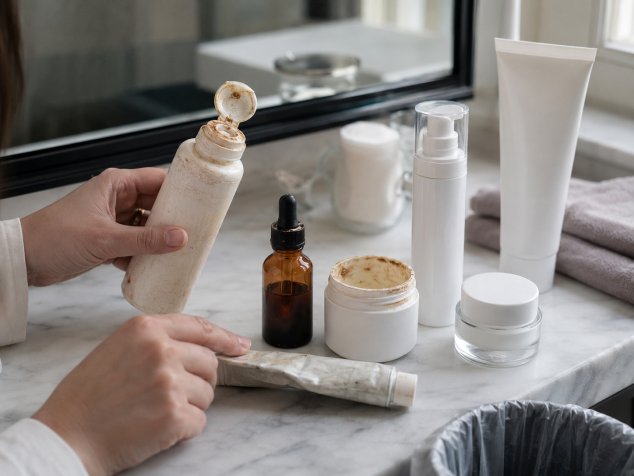
Skincare can lose its effectiveness or become questionable long before the container is empty. Checking expiration dates, opening symbols, texture, scent, and storage history helps ensure each product still performs as intended.
Skincare products do expire, and an unfinished container is not proof that its contents are still worth using. Formulas can change as they are exposed to air, light, heat, moisture, and repeated handling, which may affect their performance or cleanliness. I became stricter about skincare expiration dates after finding a half-used serum at the back of my cabinet and realizing I could not remember whether I had opened it six months earlier or two years earlier. The bottle still looked respectable from the outside, yet the liquid had darkened and smelled different. That was enough to remind me that skincare shelf life should be judged by more than the amount left in the package. Formula type, packaging, storage conditions, and manufacturer instructions all matter.
Sunscreen is the first product I check because its job depends on delivering the protection stated on the label. Once sunscreen reaches its printed expiration date, its UV-filter system is outside the period for which its labeled strength and quality are supported. The FDA advises treating sunscreen without a printed date as expired three years after purchase, although poor storage may shorten its useful life. A tube that has spent weeks in a hot car, beach bag, or direct sunlight deserves closer scrutiny even when the date is difficult to read. Separation, a strange smell, altered texture, dried residue around the cap, or a formula that suddenly drags across the skin are all sensible reasons to replace it sooner. I have tried to talk myself into finishing an old sunscreen because the bottle felt nearly full, only to notice that it had become runny in one spot and thick in another. Saving the remaining product did not feel worth questioning its reliability every time I applied it.
Oxidized serums are often easier to spot, especially when they contain L-ascorbic acid, a form of vitamin C that can be sensitive to oxygen, light, and temperature. Depending on the original formula, a vitamin C serum that began clear or pale may turn deeper yellow, amber, or brown as it ages. An unfamiliar smell or a less pleasant, stickier application can also signal that something has changed. Colour alone needs context because some vitamin C products are naturally tinted, so I compare a serum with how it looked when first opened and follow the brand’s specific guidance. Dark or opaque packaging, limited air exposure, careful storage, and a tightly closed cap may help protect sensitive formulas, although repeated opening still exposes the contents to their surroundings. When a forgotten serum looks noticeably darker than I remember, I would rather replace it than keep applying a product whose stability I already doubt.
Acne treatments deserve the same attention because products containing benzoyl peroxide, salicylic acid, adapalene, or other active ingredients are expected to perform a specific job. Expiration dates on drug products represent the period during which the manufacturer has evidence that the product retains its intended strength, quality, and purity when stored as directed. An aging acne product may therefore become less dependable, particularly if it has also been exposed to bathroom humidity, excess heat, freezing temperatures, or a damaged closure. I replace these treatments when the expiration date has passed or when the colour, smell, consistency, or packaging condition has clearly changed. A cracked pump, leaking tube, crusted opening, or separated gel makes the decision easier. This is less about assuming that every older product has become dangerous and more about recognizing that acne routines already require patience. There is little value in spending weeks using a treatment that may no longer work as intended.
Jars require another kind of inspection because every use brings the formula into contact with fingers or an applicator. Dipping fingers into moisturizer, balm, eye cream, or a mask can introduce microorganisms along with moisture and skin oils. Preservative systems are designed to control contamination, although they can weaken over time, and water-and-oil emulsions may eventually separate. I wash my hands before using a jar and keep the lid closed, yet I still pay attention to buildup around the rim, discolouration, a changed scent, unusual separation, or a surface that looks different from the day I opened it. A clean spatula may reduce direct finger contact when it is stored and washed properly, but it does not extend a product indefinitely. Once the contents look or smell questionable, scraping away the top layer does not make the rest of the jar reassuring again.
Knowing when to replace skincare becomes easier once the label information makes sense. A printed expiration date usually applies to the unopened product when it has been stored according to the directions. The period-after-opening symbol looks like a small open jar and may contain a marking such as 6M, 12M, or 24M. It indicates the recommended number of months the cosmetic should be used after opening. Batch or lot information can also help a manufacturer identify when a product was made, although consumers may need to contact the company to interpret it. My simplest habit is writing the opening month and year on the bottom of a bottle with a fine marker. I also review the cabinet regularly instead of waiting until something smells obviously wrong. Replacement timing varies by formula, packaging design, storage history, and manufacturer guidance, so universal rules such as throwing out every serum after the same number of months are rarely useful.
Replacing questionable skincare gives me more confidence that the products in my routine are performing as intended. It also removes an avoidable source of contamination or irritation and prevents me from repeatedly applying something simply because I paid for it once. I no longer feel guilty about discarding a nearly finished product that has separated or a forgotten jar whose opening date is impossible to estimate. Keeping skincare past its useful period does not recover the money already spent. It only adds uncertainty to a routine that works better when every product has a clear purpose and a condition I trust. A small opening-date note and an occasional cabinet check are usually enough to keep skincare expiration dates from becoming another complicated rule.
Pros:
- Helps ensure sunscreen and active treatments perform as intended
- Reduces the chance of using oxidized, separated, or contaminated formulas
- Makes it easier to remove forgotten products that no longer belong in a routine
- Encourages better storage habits and more thoughtful skincare purchases
Cons:
- Replacing unfinished products can feel wasteful
- Opening dates are easy to forget unless they are written down
- Period-after-opening symbols and batch codes can be difficult to interpret
- Some products change naturally, making spoilage harder to judge by appearance alone
Bottom Line:
Skincare expiration dates deserve more attention, especially for sunscreen, acne treatments, oxidation-prone serums, and frequently handled jars. A regular cabinet check and a simple opening-date label can help keep a routine dependable without requiring every product to be discarded prematurely.
Tags:
skincare expiration dates, do skincare products expire, how long does skincare last after opening, how to tell if skincare has gone bad, expired sunscreen, sunscreen shelf life, can you use expired sunscreen, expired acne products