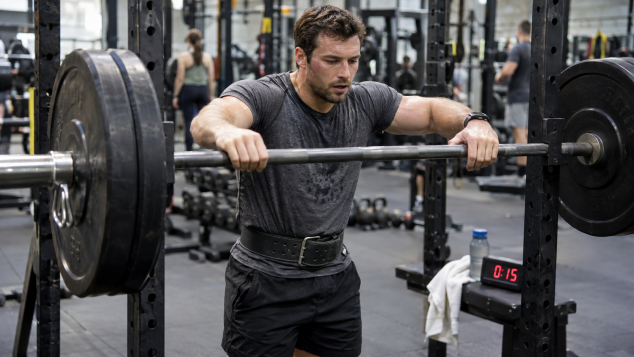
Learn how cluster sets work, how long to rest between mini-sets, and whether they belong in your strength training routine, with a practical weekly split.
Most of us learn to lift weights with one fairly straightforward rule: once a set starts, you keep going until you've completed every repetition. Stopping halfway through a set of squats to catch your breath almost feels like cheating, especially when you're accustomed to grinding through those final reps. That's what makes cluster sets such an interesting strength training technique. Cluster sets divide a conventional set into smaller groups of repetitions, separated by brief recovery periods called intra-set rest intervals. Instead of performing six consecutive barbell squats, for example, you might complete two reps, rest for 15–20 seconds, perform another two, take another short break, and finish with the remaining two. You've still completed six repetitions, but you've distributed the effort differently. I initially found the idea a little strange because resting before a set is finished seems to contradict everything we're taught about working hard in the gym. Once you understand how fatigue affects lifting performance, though, the logic becomes surprisingly convincing.
The biggest difference between cluster sets and traditional sets is what happens to your performance as fatigue accumulates. During a conventional straight set, repetitions are performed continuously, and each one can become progressively slower and more demanding. Anyone who's completed a challenging set of bench presses knows the feeling of having the first few reps move smoothly before the bar suddenly seems to gain an extra twenty pounds. Cluster training introduces short recovery opportunities that can help preserve repetition speed and reduce the performance drop-off associated with fatigue. This can be particularly useful during compound exercises, where maintaining consistent technique becomes increasingly important as the weight gets challenging. Research suggests that cluster sets can help preserve movement velocity and power within workouts, although that immediate advantage doesn't necessarily translate into greater long-term strength or muscle growth. Traditional sets remain highly effective for building muscle, especially when training volume and effort are appropriately managed. Personally, I see cluster training as another useful programming option rather than some secret shortcut to better results.
Where cluster sets start making sense to me is during strength-focused workouts involving relatively heavy compound lifts. Barbell squats, bench presses, and certain pulling exercises demand considerable effort, particularly when you're working with weights that make every repetition require concentration. By inserting 15–30 seconds of intra-set rest, you give yourself a brief opportunity to recover before tackling the next small group of reps. That may help keep the later repetitions closer in quality to the earlier ones. For example, three cluster sets of 2+2+2 repetitions provide 18 total reps on a primary exercise, with short breaks inside each six-rep set. You would then take a longer recovery period, often around two to three minutes or more for demanding strength work, before beginning the next complete cluster set. The approach appeals to me because I enjoy training heavy without turning every working set into an argument with gravity. Still, the additional pauses take time, and I wouldn't use them for every exercise. Traditional sets are generally simpler for isolation movements and accessory work, where elaborate rest structures rarely seem worth the extra attention.
A realistic way to experiment with cluster training is through a four-day upper/lower strength training split, keeping the technique limited to one primary exercise on selected days. On Monday, I'd begin with an upper-body strength session built around the barbell bench press, performing three cluster sets of 2+2+2 reps with approximately 20 seconds between each pair and two to three minutes between complete sets. I'd follow that with conventional bent-over rows for three sets of eight, incline dumbbell presses for two sets of eight to ten, and lat pulldowns for two sets of ten. Tuesday would focus on lower-body strength, starting with barbell squats using the same three-cluster-set structure, allowing 20–30 seconds of intra-set rest and approximately three minutes between full sets. I'd then complete two sets of four to six deadlifts with an appropriately manageable weight, followed by two sets of leg curls and calf raises. Wednesday would be reserved for rest or light active recovery, perhaps an easy walk and some comfortable mobility work. This is an illustrative routine rather than a universally ideal program, and exercise selection or total workload should be adjusted to suit individual recovery.
Thursday would bring me back to upper-body training with traditional straight sets, which is where this weekly structure becomes especially practical. I'd use three sets of six to eight overhead presses, three sets of eight to ten seated cable rows, and two sets each of lateral raises, biceps curls, and triceps extensions in a comfortable eight-to-fifteen-rep range. Friday would be another conventional lower-body session, featuring three sets of six to eight Romanian deadlifts, two sets of eight to ten lunges per leg, and two sets each of leg presses and leg curls. Saturday and Sunday could involve recovery, walking, or optional low-intensity activity, depending on how the week felt. I like this combination because cluster sets receive a specific purpose on the heavier strength days, while the remaining sessions allow plenty of straightforward resistance training. It also makes training volume easier to monitor. Since a cluster set still contributes six repetitions in the 2+2+2 example, I would count those completed reps toward my weekly workload while remembering that differences in load, effort, and recovery can affect the overall training stimulus.
For anyone wondering how to start using cluster sets, my first recommendation would be to master conventional resistance training before experimenting with more complicated set structures. Beginners benefit from becoming comfortable with proper squat depth, stable bench press positioning, and consistent movement patterns before introducing heavier or more demanding methods. When you're ready, choose a manageable weight, ideally something you could already lift for around six controlled consecutive repetitions, and experiment with the 2+2+2 structure on just one exercise. Re-rack the bar securely during intra-set breaks, use appropriate safety equipment, and avoid treating those brief pauses as permission to overload the movement. Keep the 15–30-second rests reasonably consistent, distinguish them from the longer breaks between complete sets, and record your weights and completed repetitions. Over time, progressive overload might involve a small increase in weight while preserving clean technique. If the bar starts moving unpredictably, your positioning deteriorates, or recovery becomes an issue, reduce the load. One mistake I'd particularly avoid is allowing cluster training to make every workout unnecessarily long. There's little benefit in adding twenty minutes of standing around simply because you've discovered a new way to organize six reps.
So, are cluster sets worth adding to your workout routine? I think they deserve consideration, especially if you've developed a solid strength training foundation and want another way to manage fatigue during challenging compound exercises. Their biggest practical attraction is the possibility of maintaining better lifting performance across repetitions while making demanding sets feel more manageable. Whether they're better than traditional sets ultimately depends on your training goals, experience, available time, and recovery capacity. Someone primarily interested in straightforward muscle-building workouts can make excellent progress without ever using cluster training. For a lifter who enjoys carefully planned strength sessions, however, experimenting with a few cluster sets on squats or bench presses could be worthwhile. I'd start with one exercise, track performance for several weeks, and judge the method by whether it actually improves the quality of my training. After all, there's something satisfying about discovering that occasionally putting the bar down can make the next repetition better. Sometimes the smartest thing you can do between reps is give yourself permission to rest.
Pros:
Better repetition quality: Short rest periods help maintain controlled technique during demanding lifts.
Less fatigue within sets: Brief recovery intervals can reduce the performance drop-off that occurs during consecutive repetitions.
Improved lifting consistency: Cluster sets can help preserve bar speed and power output, especially during heavier compound exercises.
Useful for strength-focused workouts: They work particularly well with barbell squats, bench presses, and other demanding movements.
Flexible training structure: Rep schemes such as 2+2+2 allow lifters to complete planned repetitions with short recovery breaks.
More manageable heavy training: Breaking challenging sets into smaller groups can make individual repetitions feel less exhausting.
Cons:
Longer workouts: Extra rest intervals can increase session length, especially when used across multiple exercises.
No guaranteed muscle-building advantage: Research hasn't consistently shown that cluster sets produce greater muscle growth than traditional sets.
More complicated programming: Tracking repetitions and intra-set rest periods requires additional attention.
Less practical for isolation exercises: Smaller movements often don't benefit enough to justify the added complexity.
Potential for excessive loading: Lifters may choose weights that are too heavy because the short breaks make repetitions feel easier.
Less suitable for beginners: New lifters generally benefit more from mastering basic technique and conventional training structures.
Bottom Line:
I think cluster sets are a clever addition to strength training, especially for experienced lifters who want to manage fatigue without sacrificing repetition quality. I particularly like the idea of using them for heavy squats or bench presses, where a brief pause can help maintain better control throughout a demanding set. However, I wouldn't replace traditional sets entirely. My preference is to use cluster sets selectively for challenging compound lifts while keeping most accessory exercises conventional. They're worth experimenting with if strength and consistent lifting performance are priorities, but steady progressive overload and good technique still matter far more than how creatively you divide your repetitions.
Tags:
cluster sets, cluster set training, cluster sets vs traditional sets, cluster sets for strength, cluster set workout, cluster sets for muscle growth, intra-set rest intervals, cluster set rest time, how to do cluster sets,