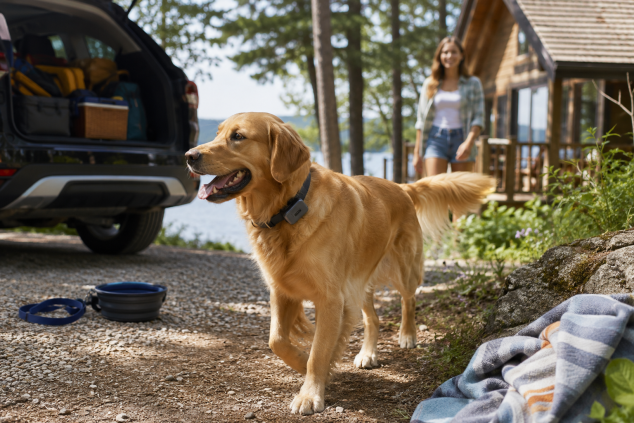
GPS smart collars give travelling dog owners an extra layer of reassurance at cottages, campgrounds, parks, and roadside stops.
GPS smart collars are gaining attention because travelling with a dog creates a specific kind of worry that ordinary pet gear cannot always address. A secure leash and a reliable recall remain essential, yet unfamiliar places introduce loose gates, open cottage properties, wildlife scents, and roadside distractions. A GPS dog collar gives owners another way to respond when a dog disappears behind the trees or slips out of sight at a busy rest stop. Recent coverage reflects that growing interest. TechRadar included a GPS smart collar among its useful dog-care gadgets, while People highlighted a Halo collar with real-time tracking and virtual fence functions on an open, unfenced property.
A GPS smart collar is a wearable device that uses satellite positioning to estimate a dog’s location and sends that information to a phone app, usually through a cellular connection or nearby Wi-Fi. Depending on the model, the app may display a live map, location history, escape alerts, activity data, and safe-zone notifications. Some systems let the owner draw a virtual boundary around a cottage, campground, or vacation rental. The collar can then issue an alert when the dog crosses that area. These functions vary by manufacturer, service region, subscription plan, and model, so the term “smart collar for dogs” covers everything from compact location trackers to larger systems with training and virtual fence features.
The travel appeal becomes obvious at an unfenced lakeside cottage. A dog may be calmly sniffing near the deck one minute and chasing something toward the shoreline the next. At a wooded campground, dense brush can hide a dog within seconds even when it has stayed fairly close. A pet GPS tracker can show which direction the dog moved and provide an alert before anyone realizes it has wandered beyond the expected area. The same dog tracker for travel can be useful during highway breaks, visits to unfamiliar parks, and walks along new trails. I would especially consider one for a dog with a strong prey drive, since squirrels and deer tend to make carefully practised recall skills feel surprisingly negotiable.
There is an important difference between a basic collar-mounted tracker and a complete GPS smart-collar system. A small tracking module usually clips onto a standard collar or harness and concentrates on live location, escape alerts, activity monitoring, and location history. This approach lets owners keep using a familiar collar and replace the strap separately when it wears out. An integrated GPS smart collar places the technology inside a dedicated collar and may add virtual boundary cues, recall sounds, lights, or training functions. Some virtual fence dog collars store boundary information directly on the device, while others depend more heavily on cellular service for tracking and notifications. Integrated systems often require careful fitting and structured training so the dog understands the collar’s signals.
The most useful GPS collar for camping is the one that still works under the conditions of the trip. GPS accuracy can shift around heavy tree cover, steep terrain, buildings, or areas with a limited view of the sky. Cellular coverage matters because many trackers use mobile networks to send coordinates to the owner’s phone. Bluetooth may help locate a nearby tracking module, although its short range makes it less dependable when a dog runs deeper into a wooded or rural area. Battery performance also changes with signal quality and tracking frequency, so charging plans deserve as much attention as advertised battery estimates. Buyers should check waterproofing, collar fit, app usability, regional service support, and ongoing subscription fees before depending on a device away from home.
Travel accessories can make GPS smart collars far easier to live with. A replacement or adjustable strap helps maintain a secure fit after swimming, muddy hikes, or changes in coat thickness. Secure attachment clips matter for collar-mounted trackers because a location device cannot help once it has fallen into tall grass. A protective cover can shield the tracking module from scratches and direct impacts, while reflective collar sections or an LED safety light make the dog easier to spot around a dark campsite. Charging cables and magnetic chargers should have a dedicated place in the travel bag. For longer cottage stays, a compact power bank provides a practical charging option when outlets are scarce. A small case keeps the charger, spare clip, and replacement components from disappearing among human travel gear.
Supporting equipment still carries much of the safety responsibility. A backup identification tag gives anyone who finds the dog a direct way to contact the owner, and a registered microchip remains valuable if the collar becomes detached. A long lead provides controlled freedom around campsites and open vacation properties. Inside the vehicle, a properly chosen restraint or secured travel crate helps prevent escapes when doors open at fuel stops. Virtual boundaries also have firm limits. An app alert cannot physically stop a determined dog, and electronic cues require appropriate training before they are used around roads, water, wildlife, or neighbouring properties. Responsible supervision remains essential, even when a GPS tracker for cottage trips appears to be working perfectly.
My view is that GPS smart collars are among the more sensible examples of pet tech for summer travel because they address a problem that feels immediate and believable. They are especially useful for owners who regularly visit unfenced properties, travel with escape-prone dogs, or feel anxious whenever a dog vanishes behind a tree line. The best dog safety technology provides clearer information during a stressful moment and encourages better preparation before the trip begins. A GPS collar will never guarantee that a dog stays close, though it can shorten the frightening period when an owner has no idea where to look. That value carries beyond summer into hunting season, holiday travel, everyday walks, and visits to any unfamiliar place.
Pros:
- Provides live location tracking when a dog wanders out of sight.
- Sends escape alerts and safe-zone notifications on unfamiliar properties.
- Useful at cottages, campgrounds, parks, trails, and roadside stops.
- Location history can help owners identify where a dog has travelled.
- Some models include activity monitoring, lights, or virtual boundary features.
- Waterproof designs can suit swimming, rain, and muddy outdoor trips.
- Adds reassurance for dogs with strong prey drives or wandering habits.
Cons:
- Many GPS smart collars require a cellular subscription.
- Tracking accuracy can decrease under dense trees or around large buildings.
- Rural areas with weak cellular service may delay location updates.
- Frequent live tracking can drain the battery more quickly.
- Collars and charging equipment add extra travel preparation.
- Integrated systems may feel bulky on smaller dogs.
- Virtual boundaries cannot physically contain a dog and require proper training.
- Features and accessory compatibility vary widely between brands.
Bottom Line:
GPS smart collars are a worthwhile piece of dog safety technology for owners who regularly travel to unfamiliar or unfenced places. They cannot replace a leash, secure identification, or attentive supervision, though live tracking and escape alerts can make a frightening situation easier to manage. For cottage trips, camping, road travel, and outdoor vacations, a dependable GPS dog collar offers practical reassurance that justifies the charging routine and subscription cost for many owners.
Tags:
GPS smart collars, GPS dog collar, dog tracker for travel, pet GPS tracker, smart collar for dogs, GPS collar for camping, dog safety technology, virtual fence dog collar, GPS tracker for cottage trips, pet tech for summer travel,