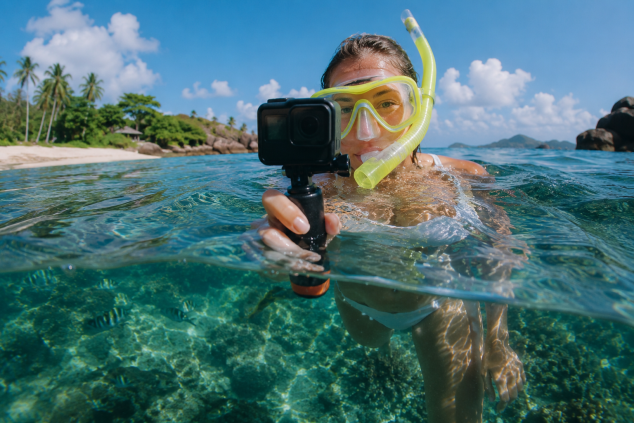
From snorkeling excursions and beach vacations to kayaking trips and travel photography, modern underwater cameras make it easier than ever to capture moments that smartphones often miss.
Every summer I look for one piece of technology that genuinely improves the way I experience a trip, and lately that has been the new generation of underwater cameras. Whether I'm snorkeling over a reef, paddling through a quiet bay in a kayak, or spending long days at the beach, these compact cameras have completely changed how I capture memories. They go places I would never trust a smartphone to survive, and they make it possible to bring home photos and videos that actually reflect what the experience felt like.
Modern underwater cameras are a long way from the bulky waterproof gadgets I remember seeing years ago. Today's models combine impressive image quality, powerful stabilization, rugged construction, and surprisingly simple controls in devices that can fit into a pocket or small travel bag. The best underwater cameras for snorkeling now produce sharp, vibrant images with rich detail, even in constantly moving water. Many can handle sudden splashes, drops onto rocks, and long days in the sun without requiring special treatment. That combination of durability and convenience has made them one of the most useful pieces of summer travel technology I own.
My enthusiasm really took off during snorkeling excursions. Looking down into clear water and seeing schools of fish move through shafts of sunlight is difficult to capture with a phone sealed inside a waterproof pouch. Underwater photography cameras are designed specifically for this environment. Their controls remain accessible underwater, and many offer color profiles that help restore the reds and oranges that naturally disappear beneath the surface. I've also started using lens filters designed for underwater color correction. These filters attach to the front of the camera and help produce more natural-looking images in blue or green water, reducing the amount of editing required afterward.
Beach vacations have become another perfect setting for these cameras. Sand, saltwater, sunscreen, and unpredictable weather create conditions that can be stressful for expensive smartphones. A rugged waterproof camera removes that worry. I can hand it to a friend, toss it into a beach bag, or carry it straight into the surf without constantly checking for water damage. A floating hand grip has become one of my favorite accessories because it prevents the camera from sinking if it slips out of my hand while swimming. Brightly colored and easy to spot in the water, these grips add a surprising amount of peace of mind.
Kayaking trips have highlighted another advantage of modern action cameras and waterproof travel cameras: versatile mounting options. Helmet mounts and kayak mounts allow me to capture a first-person view of winding waterways and shoreline scenery without needing to hold a camera. Suction mounts can attach securely to smooth surfaces on boats and rental equipment, creating stable footage during long paddles. For moments when I want wider shots, an extendable selfie stick helps capture both the surrounding landscape and the people sharing the adventure. The resulting footage feels immersive and natural, closer to the actual experience than a collection of still photos.
The technology inside these cameras has improved dramatically as well. Image stabilization is one of the biggest reasons I recommend them. Water movement, waves, and uneven terrain can make footage difficult to watch, but stabilization systems now smooth out much of that motion automatically. Battery life has improved enough for full-day excursions, especially when paired with extra batteries and a portable charging bank. I keep both in a compact travel case along with spare memory cards, which makes it easy to stay prepared for long days away from hotels or charging outlets. Those small accessories often determine whether I capture an unforgettable moment or miss it entirely.
One detail that often goes unnoticed is how much easier these cameras are to maintain and transport than many people expect. Waterproof housings provide additional protection for deeper dives or rough conditions, while anti-fog inserts placed inside the housing help prevent condensation from obscuring photos and video. Wrist straps offer a simple layer of security when swimming in currents or navigating rocky shorelines. Because the entire setup remains lightweight and portable, it never feels like carrying professional photography equipment. Instead, it feels like bringing along a reliable travel companion that is always ready for the next adventure.
What makes this category so appealing is its long-term usefulness. The same camera that captures underwater photography during a tropical snorkeling trip can document family beach vacations, weekend kayaking outings, lakeside camping adventures, and everyday outdoor exploration for years. For anyone searching for the best underwater cameras for snorkeling, an underwater camera for beach vacations, a camera for kayaking trips, or an action camera for travel, the latest generation delivers far more than waterproof protection. It creates opportunities to preserve experiences that would otherwise disappear the moment you step out of the water. Every summer seems to offer a new reason to bring mine along, and it has quietly become one of my favorite travel gadgets because of that.
Pros:
- Captures photos and video safely in and around water
- Excellent for snorkeling, swimming, kayaking, and beach vacations
- Rugged construction handles drops, sand, saltwater, and outdoor conditions
- Better waterproof reliability than most smartphones
- Advanced image stabilization creates smoother footage
- Compact and lightweight for travel
- Wide range of useful accessories available
- Long battery life on many modern models
- Easy to mount on helmets, kayaks, boats, and other equipment
- Great for documenting adventure travel and outdoor activities
- Waterproof housings allow use in deeper water environments
- Produces unique vacation photography that would otherwise be difficult to capture
Cons:
- Additional accessories can increase the overall cost
- Image quality may still fall short of dedicated high-end cameras
- Batteries can drain quickly during extended video recording sessions
- Underwater color correction may require filters or editing
- Small buttons can be difficult to use with wet hands or gloves
- Memory cards and spare batteries become almost essential for longer trips
- Waterproof housings can add bulk to some setups
- Learning the best camera settings for underwater conditions takes practice
Bottom Line:
Modern underwater cameras have become one of the most useful travel gadgets I own. They allow me to capture snorkeling adventures, beach vacations, kayaking trips, and other outdoor experiences with a level of confidence that smartphones simply cannot match around water. For anyone who spends time near oceans, lakes, rivers, or pools, the latest generation of underwater cameras delivers lasting value and earns a permanent place in a travel bag year after year.
Tags:
underwater cameras, waterproof cameras, underwater cameras for snorkeling, waterproof travel camera, underwater photography camera, camera for travel, camera for kayaking trips, beach vacation camera, snorkeling photography, waterproof camera