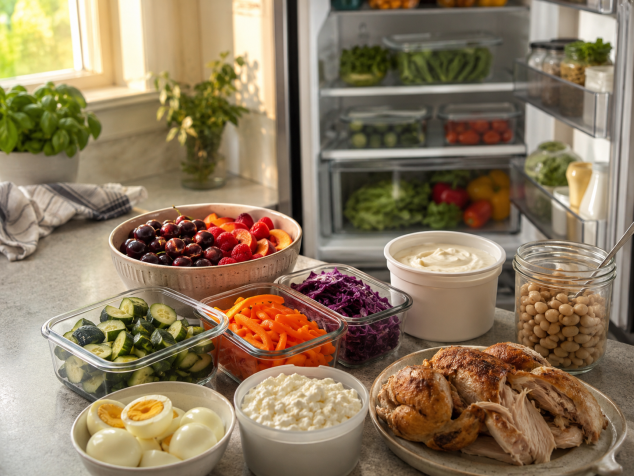
eeping washed fruit, chopped vegetables, simple proteins, and grab-and-go staples in the fridge makes healthy summer eating feel much more realistic. It gives you fast lunches, snack plates, wraps, salads, and light dinners without needing to meal prep.
The healthy habit that has helped me most during busy summer weeks is surprisingly simple: I keep ready-to-use ingredients around so eating well feels like the easiest option. I used to think healthy summer eating meant making a full plan, cooking big batches, and lining up neat containers in the fridge. That sounds lovely in theory, but in real life, I do not always want Sunday afternoon to revolve around cooking rice, roasting vegetables, and pretending I know exactly what I will feel like eating on Thursday.
What works better for me is a fridge and pantry stocked with flexible staples. Washed berries, sliced watermelon, grapes, chopped cucumbers, cut bell peppers, shredded carrots, rotisserie chicken, Greek yogurt, cottage cheese, hard-boiled eggs, canned beans, hummus, whole grain wraps, salad greens, and a couple of decent dressings can carry an entire week without making me feel boxed in. This is my version of no meal prep meals: I do a little setup, then let the meals come together based on the day.
The reason this habit works so well is that it removes the annoying part of eating better: deciding what to eat when I am already hungry. If the fruit is washed, the vegetables are chopped, and the protein is ready, lunch becomes much less dramatic. I can make a chicken wrap with greens and yogurt-based dressing, a cottage cheese bowl with tomatoes and cracked pepper, a snack plate with eggs and fruit, or a quick salad with canned beans, rotisserie chicken, and crunchy vegetables. None of it feels like a big production, which is exactly why I keep doing it.
I also like that this approach lines up with the balanced plate advice you hear from registered dietitians and credible nutrition resources: get some protein, add fruits or vegetables, include fiber-rich carbohydrates when you want them, and make the meal satisfying enough to last. I am much more likely to follow that kind of healthy eating guidance when the ingredients are already waiting for me. A bowl with Greek yogurt, berries, and granola feels easy. A plate with hard-boiled eggs, cucumbers, hummus, beans, and pita feels like lunch. A wrap with chicken, chopped vegetables, and a little cheese feels like something I actually want to eat.
This feels especially useful in summer because heavy cooking loses its appeal fast. When it is hot out, I want quick summer lunches, cold snacks, and light dinners that do not leave the kitchen feeling warmer than it already is. Ready-to-eat healthy ingredients make that possible. I can throw together a salad bowl after being outside, build a snacky dinner when nobody wants a full meal, or make something filling before heading back out for the evening. It keeps healthy summer eating practical instead of precious.
The best part is that this habit still leaves room for real life. Some days the rotisserie chicken becomes tacos. Some days the cottage cheese is breakfast. Some days dinner is a plate of fruit, eggs, vegetables, crackers, and whatever dip is in the fridge. It may look casual, but it works because there is always something fresh, filling, and easy to grab. For anyone who wants easy healthy meals without committing to full meal prep, this is the summer habit I would recommend first.
I think of it as building a better default. When the fridge has washed fruit, chopped vegetables, simple proteins, and a few pantry staples, eating better takes less effort. That is what makes it sustainable. It does not require a challenge, a strict plan, or a perfectly organized week. It just makes the next good choice easier, which is exactly the kind of healthy habit that lasts.
Pros:
- Makes healthy summer eating feel easier without committing to full meal prep.
- Saves time because fruit, vegetables, proteins, and pantry staples are already ready to use.
- Reduces decision fatigue when you are hungry and need a quick lunch or snack.
- Works for wraps, salads, bowls, snack plates, and light dinners.
- Helps avoid relying on takeout or random grazing when the week gets busy.
- Feels flexible, so you can still eat what sounds good that day.
- Uses simple staples like Greek yogurt, cottage cheese, rotisserie chicken, eggs, canned beans, and chopped vegetables.
Cons:
- Requires some fridge space and a little planning before the week starts.
- Pre-cut produce can spoil faster if you buy or prep too much at once.
- It can get repetitive without a few sauces, seasonings, wraps, or crunchy add-ons.
- Some ready-to-eat staples, like rotisserie chicken or pre-washed produce, may cost more than cooking everything from scratch.
- You still need to restock regularly so the habit does not fall apart midweek.
Bottom Line:
Keeping ready-to-use healthy ingredients on hand is one of the most realistic summer eating habits because it makes the better choice easier without turning food into a project. It is practical, flexible, and especially helpful when you want quick healthy meals with less cooking and fewer decisions.
Tags:
healthy summer eating, easy healthy meals, no meal prep meals, ready-to-eat healthy ingredients, quick summer lunches, healthy fridge staples, realistic healthy habits, summer meal ideas, healthy snack plates, rotisserie chicken meals, easy salad bowls