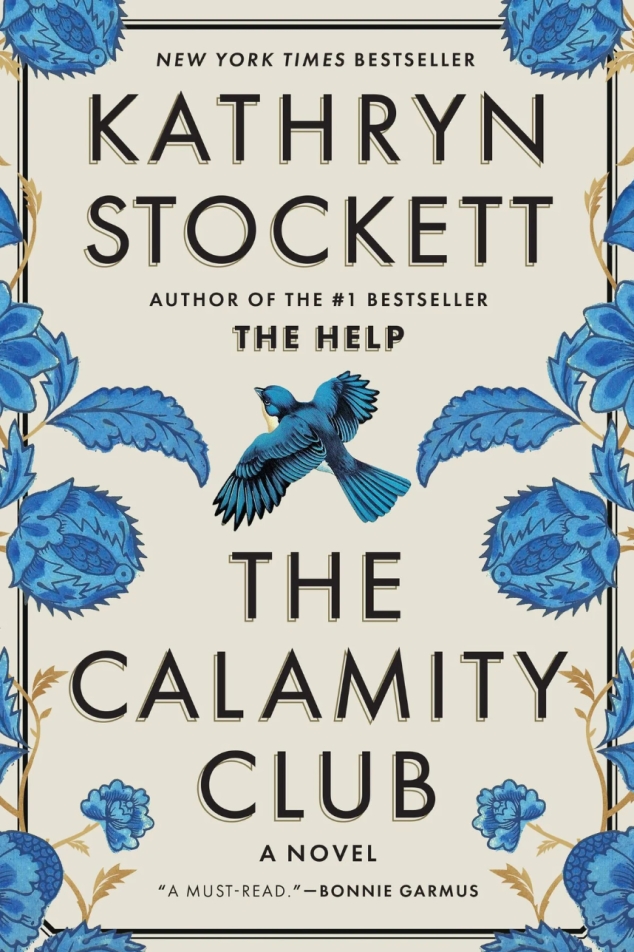
The Calamity Club by Kathryn Stockett taps into the lasting appeal of women-centred historical fiction, where personal survival and social pressure make the past feel immediate.
The Calamity Club reflects one of historical fiction’s most enduring strengths: it uses the lives of women to make a distant era feel emotionally close. Kathryn Stockett’s novel is set in Oxford, Mississippi, in 1933, where several women’s paths converge as the Great Depression places growing pressure on their choices and relationships. That premise immediately caught my attention because large historical events become easier to understand when they are experienced through intimate questions. Who gets protected when money disappears? Whose reputation matters more than her safety? How much can a woman risk when respectable society has already decided what her life should look like?
What interests me about The Calamity Club by Kathryn Stockett is the way its historical setting appears built around women with very different kinds of vulnerability. The confirmed premise brings together an outspoken unmarried woman, a motherless girl living in an orphan asylum, and another woman whose circumstances have left her with few comfortable options. Their stories suggest a version of history shaped through dependence, social judgment, and the daily work of staying resourceful. I find that perspective far more involving than a distant account of Depression-era hardship. The economic crisis becomes personal when shelter, family loyalty, and a woman’s standing in the community can all be threatened by a single decision.
Historical fiction with strong female characters continues to resonate because the genre gives readers a clear view of the rules women were expected to follow. Marriage could determine security. Respectability could affect whether a woman received sympathy or suspicion. Family bonds often came with obligations that were difficult to refuse. Women-centred historical fiction works especially well when its characters have complicated reactions to those pressures, including resentment, affection, fear, and the occasional reckless idea. The Calamity Club novel appears interested in women who have reached the edge of what they can tolerate, which gives its historical framework a welcome sense of urgency.
Books about women overcoming hardship can sometimes flatten resilience into an admirable personality trait. Real survival tends to be messier. It can involve bruised pride, uneasy compromises, and relationships strained by scarcity. That is where character-driven historical fiction earns its emotional weight. I want to see how people behave when helping someone may cost them something, or when reinvention requires choices their neighbours would condemn. The Calamity Club appeals to me because its central women seem positioned to challenge one another as much as they support one another. Friendship becomes more convincing when it has friction, especially in a world where everyone is carrying private worries.
The idea of personal reinvention also feels central to the lasting popularity of this kind of historical fiction. A restrictive period creates powerful tension around the simple question of whether a woman can become someone different from the person her family or community expects. Modern readers may live with greater freedom, yet the fear of disappointing people and starting again remains familiar. That connection helps historical settings feel immediate without forcing them into a present-day mould. Among readers searching for the best historical fiction novels to read, The Calamity Club has a strong point of entry: its women are facing circumstances rooted in 1933 while wrestling with emotional decisions that still feel recognizable.
It is easy to see why The Calamity Club could also become one of those historical fiction books for book clubs that produces a lively conversation after the final page. Stories about economic desperation and women’s autonomy naturally raise questions about morality, class, loyalty, and who has the power to define respectable behaviour. Different readers may sympathize with different choices, particularly when a character’s options are limited by forces outside her control. That interpretive space matters. A good book-club novel gives people more to discuss than whether they liked the ending. It leaves them debating which risks were justified and whether survival changes the rules.
For readers interested in Kathryn Stockett books, The Calamity Club offers a return to Mississippi through another story shaped by social pressure and memorable women. Its 1933 setting, intersecting female lives, and focus on people underestimated by their surroundings place it firmly within the continuing appetite for immersive women-centred historical fiction. I am drawn to novels that let history settle into ordinary rooms, tense conversations, and relationships that change under pressure. The Calamity Club promises that kind of closeness, making hardship feel human-sized and female reinvention feel both dangerous and possible.
Pros:
- Strong appeal for readers who enjoy women-centred historical fiction
- Depression-era setting adds social tension and emotional weight
- Female characters facing hardship create strong book club discussion potential
- Focus on relationships and reinvention should suit fans of character-driven novels
- Kathryn Stockett’s return to a Mississippi setting may interest readers familiar with her earlier work
Cons:
- Readers seeking fast-paced action may find the character-focused approach slower
- The difficult historical circumstances could make parts of the story emotionally heavy
- Multiple intersecting perspectives may require close attention
- Readers who prefer broad historical events over personal stories may find the scope too intimate
Bottom Line:
The Calamity Club looks especially promising for readers who enjoy historical fiction with strong female characters, complicated relationships, and morally difficult choices. Its Depression-era setting gives the personal struggles real weight, making it a compelling choice for literary fiction readers and book clubs.
Tags:
The Calamity Club, The Calamity Club by Kathryn Stockett, Kathryn Stockett, historical fiction with strong female characters, women-centred historical fiction, character-driven historical fiction, historical fiction books for book clubs,